 Prize
Table payouts
Blackjack 3 to 2, 6 to 5 and pushes
 Partner advertising · Great BritainUpdated 16 November 2026
Advertisement · 18+. Bonus amounts, ratings and review counts are campaign-supplied figures, not independently verified reviews. This placement does not confirm a British gambling licence. Check local eligibility, availability and current terms with the operator.



Compare how a natural blackjack is paid and how a tied hand is settled under the stated rules.
· Prize Lattice editorial
Featured slots



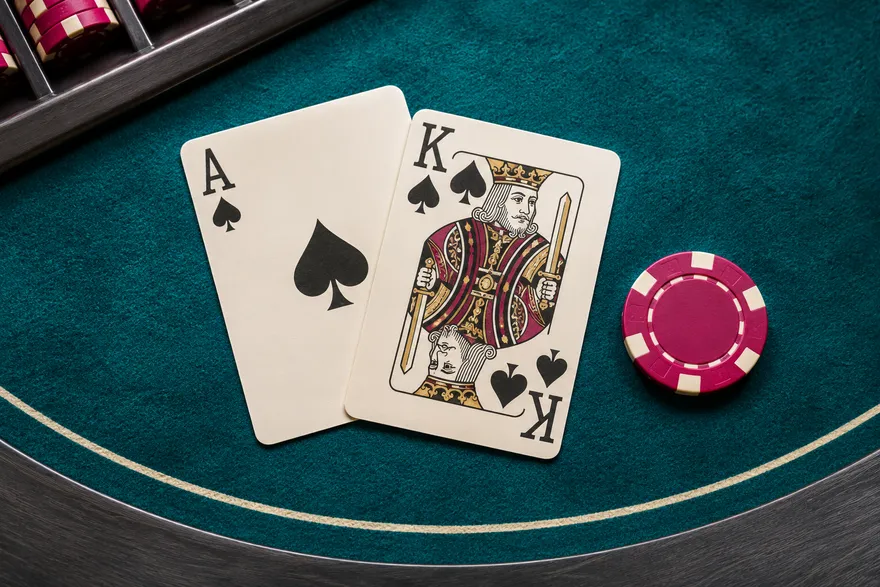
Use the line for a natural blackjack
A natural normally means an ace and a ten-value card in the first two cards. An ordinary total of 21 reached with additional cards can follow the ordinary-win rule. A 21 after a split can have a separate treatment too. Check what the game actually classifies as a natural before assuming the premium applies.
Compare the same stake at both ratios
At 3 to 2, a £5 hypothetical qualifying natural pays £7.50 profit and returns the £5 stake for a £12.50 gross credit. At 6 to 5 the same £5 pays £6 profit and £11 gross. The difference is £1.50 for that qualifying result. How much this matters to the game overall depends on the full rules.
| Result and rule | Profit | Total credit |
|---|---|---|
| Natural at 3:2 | £7.50 | £12.50 |
| Natural at 6:5 | £6.00 | £11.00 |
| Push | £0.00 | £5.00 |
Read what happens on a push
Where the table calls the result a push, the stake is returned without profit for that hand. A split can create two hands whose settlements differ. Side bets and special variants have independent terms, so evaluate their amounts separately if they are included in the same end-of-round display.
Check a split hand on its own branch
Suppose you split a pair, a new card brings one hand to 21 and the other hand pushes. The actions created two stakes and the rules can classify that first hand as an ordinary 21. If both hands used £5 and the first paid even money, the credit would be £10 plus £5 from the push. Subtract the £10 staked across the two hands to get a £5 net result.
Keep a premium payout separate from the overall odds
The difference between 3:2 and 6:5 is 0.30 times the stake for a qualifying natural. It is not correct to apply that difference to the payout of every ordinary win. The dealer’s rules, whether the table checks for a dealer natural, and which actions are permitted can all affect the game overall. The example compares the settlement of one specific result and assumes all other conditions are held constant.
Read the display convention at the end
Look for whether the history labels its result as ‘paid’, ‘win’ or ‘returned’. A win field can refer to profit while a credit field may include the stake. A push can appear as a credit of exactly the stake. If two hands or an optional side bet are grouped in the same record, use the per-hand entries and avoid including the returned stake twice.
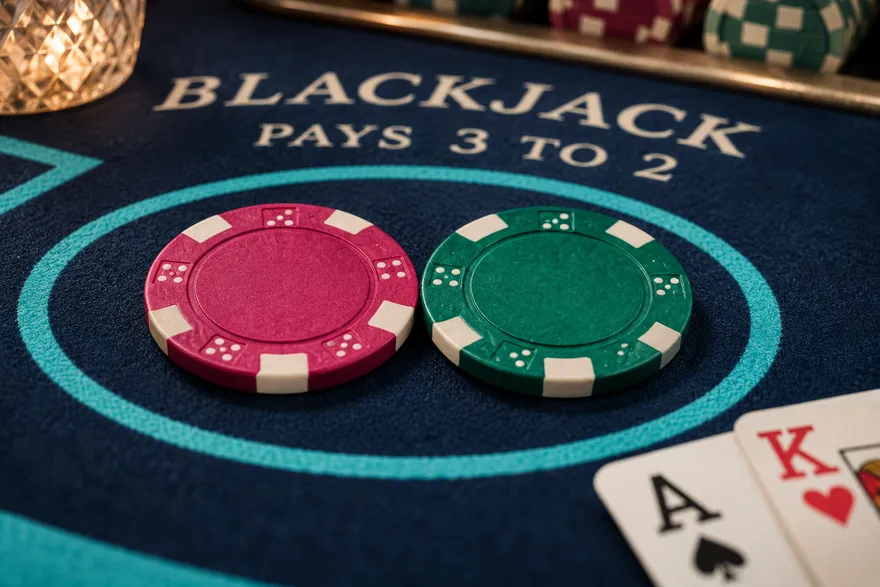
Common question
Is 6 to 5 the payout for every winning hand?
The premium normally refers to a natural when the rules say so. Read ordinary wins, splits and draws separately.